
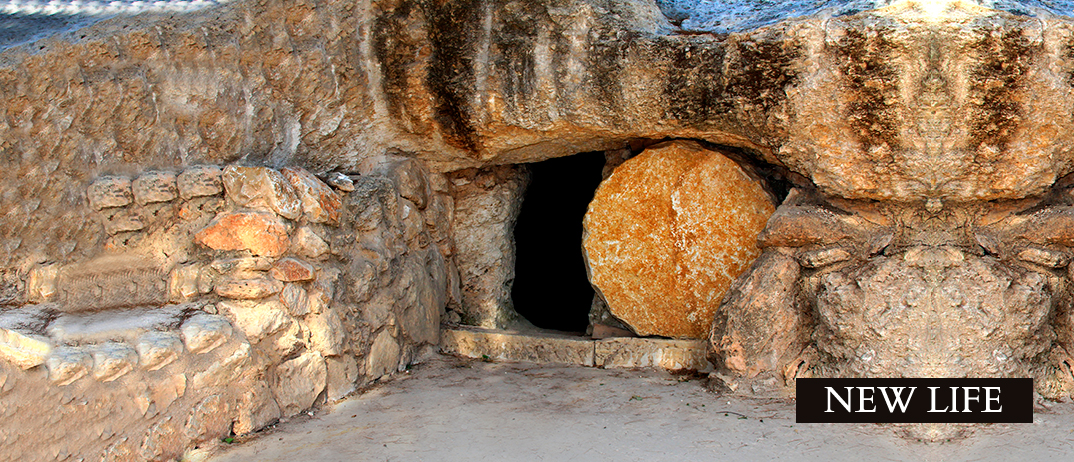
When the stone was rolled from the tomb that held Jesus’ body, there was nothing there. So why was this such an important moment?
The young Jewish woman stood peering into the rock-hewn tomb, typical of the many hundreds of such places of burial around Jerusalem. But this one was different – it had, to her mind, been desecrated.
The body of the young prophet of Galilee was missing. Not content with crucifying him on a trumpedup charge, the authorities had now subjected his body to the ultimate indignity, denying him even in death the dignity of burial, and denying those who loved him the opportunity of anointing his body according to custom.
As she stood there, the sobs of grief heaving in her breast, she heard a movement behind her, and a gentle voice: “Woman, why are you crying?” Blinded by her tears and with sorrow numbing her mind, she supposed the voice to come from the gardener.
She asked for any information he might have on the night’s clandestine activities, particularly as to where her Lord’s body was. Then at least she might retrieve the body from the place where it had no doubt been unceremoniously disposed of and give it a decent re-burial. Then the voice which she loved more than anything on earth spoke one word, her name ‘Mary’ in such a personal and unmistakable way that in an instant the sorrow and despair were swallowed in a vibrant expression of faith and love.
“O my Master!” she exclaimed, and clung to him. Her joy and enthusiasm at seeing him were so great that even her risen Lord had to gently check her!

The site in Jerusalem that many historians believe was the tomb of Jesus
Awe-struck yet filled with inexpressible joy, the formerly notorious woman, Mary of Magdala, rushed back to the unbelieving disciples of Jesus and burst in on them with the news which has thrilled the hearts of Christians for centuries: “I have seen the Lord.” Mary of Magdala was granted the privilege to be the first person to see Jesus alive after his resurrection from the dead. But she was soon followed by many others.
Writing less than 25 years after the events took place, St Paul, in an open letter to Christians living in a prominent city in the Roman Empire specifically names credible witnesses to the resurrection.
He even goes so far as saying that Jesus appeared to 500 of his disciples at one time, many of whom were still living at the time of writing and could be called upon to testify to the fact that they saw Jesus alive. What’s more, the experience of the risen Christ had dramatically changed their lives.
Nor does the list of witnesses stop there. In the 2,000 years since these dramatic events took place, millions of people – rich and poor, high and low, educated and ignorant, of every race on earth – have experienced the power of the risen Christ in their lives.
They have made the wonderful discovery – as Mary of Magdala did on that first Easter morning – that the Christian faith is a living relationship with a Saviour who rose from the dead and lives forever so that we might share his life.
Extract adapted from: ‘The Weekend That Changed The World’ by David Littlewood. This deals with the events of Easter and their relevance for today. Copies are available from editorial@newlife.co.uk