
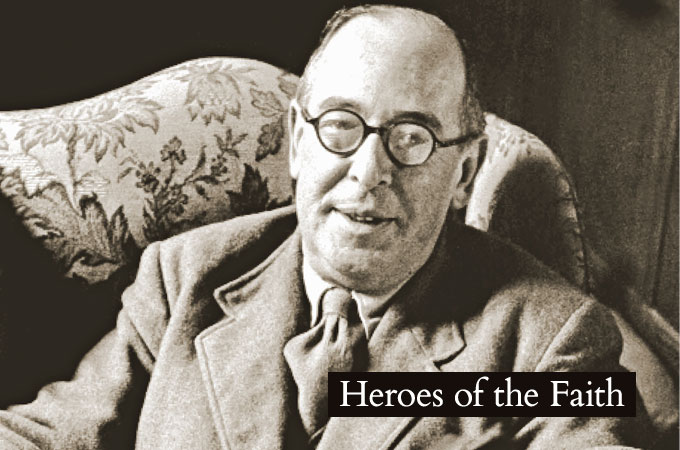
CS Lewis’ works are still the subject of movies, television programmes and academic books, 50 years after the Christian apologist’s death.
It is one of the great paradoxes of modern academic history that half a century on from his death, the literary and theological works of an Oxbridge don should still be making a stir in both the secular and religious media.
Such attention would have no doubt puzzled the man in question, a certain CS Lewis, whose untimely death in November 1963 was overshadowed in the news reporting of the day by the assassination of President JF Kennedy.
The fact is, of course, that Lewis was not a trained theologian. And as a one-time atheist (a rather vociferous one, if contemporary accounts are to be believed) he would have appeared an unlikely advocate for the Christian faith.
But following the rule that ‘converted poachers make the best gamekeepers’, Lewis’ newspaper articles, his wartime radio broadcasts and his theological books and children’s novels made him one of the most brilliant and widely-read apologists of the Christian faith in the 20th century.
One primary reason for this is that Lewis was a brilliant communicator. His fame as a lecturer at Oxford, where his subject was Mediaeval English Literature, was legendary, and would ensure the lecture hall was packed out whenever Lewis spoke. As this untidy-looking man boomed out his knowledge – most of it from memory with only the briefest of notes – it is said that the girls would lie on the boards at his feet, drinking in the vivid images he presented. In fact, the joke at Oxford at the time was that the best time to ask a girl out was when she was enamoured from listening to one of Lewis’ lectures on courtly love!
After Lewis had made the somewhat long and tortuous journey from atheism to theism and finally, Christianity, a unique ability to communicate shone through in his presentation of the Christian faith.
In fact, when his wartime radio talks on Christianity (which eventually became the classic book, ‘Mere Christianity’) were broadcast, it is said that pubs full of soldiers and working men would fall silent as they listened to this posh accent talk to them of the relevance of Jesus Christ to the world in which they lived.