
Mixing in the community is vital, says pastor Stephen Gray.,,,
It’s a standing joke in my church that I have an office I never use; everyone meets me in the coffee shop, explains Stephen Gray.
Why be a person of influence only in your church, when you can be a person of influence in your whole community? asks Stephen Gray.
For the 22 years he has pastored Crewkerne Community Church in Somerset, this is the approach he has adopted towards his rural congregation and town.
Stephen’s church, which meets online as well as in person, sits in the heart of Crewkerne, a market town with a population of around 7,800.
From the outset, he has immersed himself in community life in order to serve his congregation and neighbours.
“Someone once famously advised ministers to walk slowly through their pews,” he says. “But I would say walk slowly through your community instead.
“To love people means you need to be with them, walking alongside them, and you can’t do that from the pulpit.”
While this approach is vital for all churches, he says, it’s especially important in a rural community.
For Stephen, a big focus is supporting people through the sort of challenges more commonly associated with towns and cities.
“You go to conferences and hear about the issues people are facing in cities – stress, depression, questions over sexual and gender identity, drugs, poverty, suicide – but these all exist in rural areas too.
“We’ve had sex offenders, addicts, domestic abuse victims and murderers in church. We get homeless people passing through Crewkerne. Rural towns and villages also have a big problem with suicide too.”
Crewkerne Community Church aims to support people in these situations.
“We have a ‘homeless mandate’, for example, where we’ll put any homeless person up in a hotel for three nights while we try to signpost them to services they need.”
Stephen also tries to give his community a voice when issues arise. “We had a couple of men get married in town – both came to our church – and it caused tension, not just in church life but also in the community as people would watch what we say and do.
LISTEN
“In a rural church context everyone has a voice, and those voices need to be listened to. People had questions so we sat and talked with them, explaining our beliefs from the perspective of the Bible’s view of sexuality.
“I find that if we show understanding at the beginning, while people might not agree with our views, they will respect them.”
Supporting the wider community also means engaging with existing facilities and services, says Stephen.
“It’s a standing joke in my church that I have an office I never use; my office is in the coffee shop and everyone meets me there instead. Rather than create our own café we got involved with the one that’s already there.”
In this vein, Stephen has engaged with virtually every organisation in the town: the local business forum, schools, hospitals, Rotary and Lions Clubs, the local Probus club and the town council.
At present, he is also supporting teachers who are struggling with the transition from a middle school three- tier system to a two-school system that has been imposed on them.
Stephen’s wife Cathie – an RE and science teacher in the local middle school – has done likewise, building links with teenagers by coaching an under-15s girls’ rugby team while also playing for Crewkerne Ladies Rugby Team.
Whoever he talks to, Stephen always asks the same three things to connect with them: tell me something good, something bad and something I can pray for.
“It opens up conversation with everyone,” he says. “I’ve asked this of directors I’ve been sat with who were having to make redundancies and were finding it difficult, for example – sometimes they just need someone to talk to.”
“I long to see a kingdom of God perspective in every area of Crewkerne life and in all of its people. A rural church pastor can be that influence.”
GOOD NEIGHBOURS
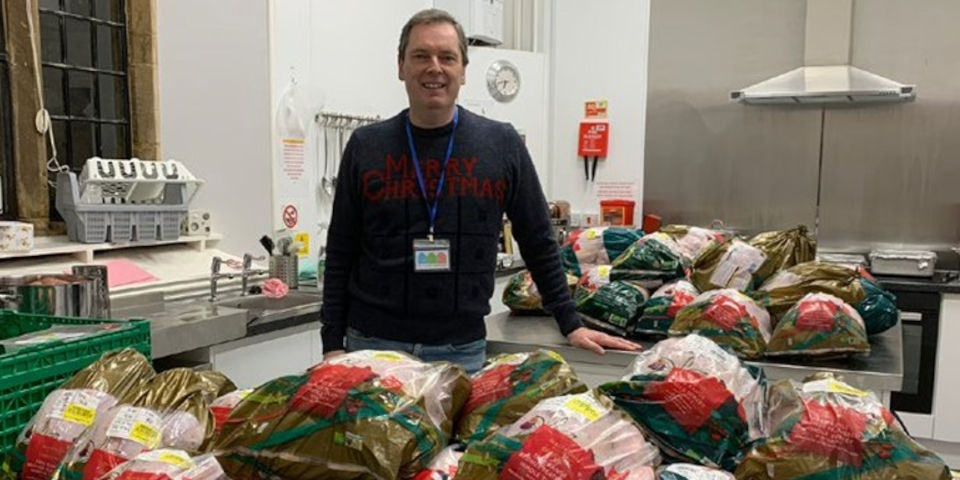
Supporting the Crewkerne community can sometimes mean starting something new, too. During the pandemic, the church launched its Be A Good Neighbour scheme to deliver shopping, prescriptions and free fresh meals, combat loneliness with phone calls and provide a food bank top-up service and school supplies for families in poverty.
“We’ve had around 200 volunteers – actors, counsellors, teachers, army, police – helping during the pandemic. We’ve done more than 20,000 tasks. We constantly get referrals from hospitals and the police now – they all connect with us.”
While Stephen enjoys ministering in a rural setting he admits it has its challenges.
“The nightlife is badgers and foxes and it’s like living in a goldfish bowl: you’re always on show.
“You can’t be Pastor Stephen on Sunday then just Stephen on Monday. You’re always the minister and you need to be available all the time.”
That said, he is keen to challenge the perception that pastoring a rural church should be approached as a step towards bigger things.
“Rural churches are not just stepping stones for ministers waiting to go somewhere else.
“If you pastor one, you can live in the community and really go for it. You have the opportunity to minister to your whole town and really help make a difference.
“Why limit yourself to church when you can bless and support your town too?”
From Direction Magazine issue 235


