
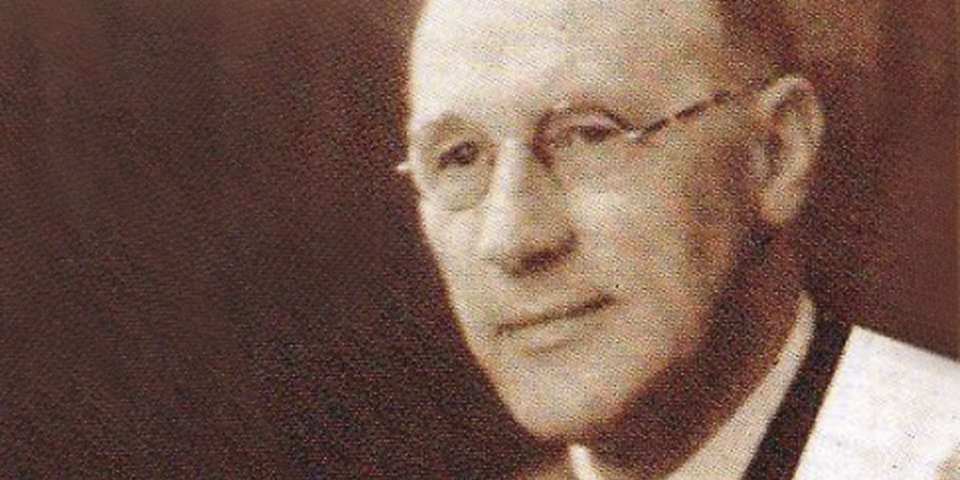
'The Gifts of the Spirit' by Harold Horton became an instant classic,,,
First published in 1934, Harold Horton’s book, The Gifts of the Spirit, became an instant classic, shaping the thought and practice of subsequent generations of Pentecostals. Based on Howard Carter’s study notes, Horton’s book is notable for stressing above all the supernatural gifts Paul talks about in 1 Corinthians 12-14. The language may be a little dated, but the fire of the original lives on.
The redeemed of the Lord are not only saved unto everlasting life; they are the children of God. When we say we are the children of God and that God is our Father we are not merely employing terms of inspiration or endearment, we are not making sentimental nor even devout reference to One who has in marvellous condescension taken up towards us an attitude of benevolence and loving kindness.
When we say that God is our Father and we are his children, we are using terms of absolute relationship. We are not merely accepted of God: we are begotten of God. Our relationship to God is not one of divine courtesy but of divine life. We are born of God. Our divine parentage is as real as, but infinitely more enduring than, our human parentage. As children of God we are partakers – now – of his mighty, miraculous, super-nature. Beloved, now we are the sons of God, partakers of his divine nature (2 Peter 1:4; 1 John 3:2).
The message of the whole of Scripture is that this miraculous super-nature of God should be manifest in his children. Like father, like son. And God has made full provision for the manifestation of that super-nature in his children in the gifts of the Holy Spirit.
Now the heavenly super-nature of the Lord Jesus was manifested not in the carpenter’s shop in Nazareth, for there, during the whole of his young manhood, in common with all the carpenter-fellows of his day, he wrought the objects of his trade by human skill and by the use of ordinary material tools. The marvellous fabric of his spotless daily life he also wrought through faith and the word that were available to the men and women round about him.

His divine super-nature was manifested in his miraculous works wrought by those heaven-given tools, the gifts of the Holy Spirit, with which he was endowed immediately on his receiving the baptism of the Holy Spirit on that memorable day in Jordan (Matt 3:16). The Scripture is scarcely more insistent on any subject than on this – that the children of God should express at least in some fragmentary measure this divine miraculous super-nature. For this reason both the Lord Jesus and his children are said in the prophets to be ‘for signs and for wonders’ (Isaiah 8:18).
This supernatural divine power and wisdom was seen in unmistakeable manifestation in his simple children immediately after their baptism in the Holy Ghost on the day of Pentecost. It was not a theological claim that arrested the devout Jews on that memorable day, but a manifestation of divine wisdom and power in the speaking of miraculous tongues by unlearned followers of the Lord Jesus.
It was not a masterly unfolding of the word that set the envious priests by the ears some time later, but a mighty and immediate operation of the gifts of the Spirit in a lame-born man by two of the simple children of God. It was not a phenomenal display of evangelical fervour that swept Samaria some time later still, but a repeated demonstration of the gifts of the Spirit in supernatural healings, through the Spirit-filled hands of one who was not considered capable of ministering the word of God (Acts8:6; 6:2-4). Neither was it alone the sweet savour of fragrant holiness in Paul that caused the astounded Lycaonians and the gentle hearted Maltese barbarians to ascribe to him divine origin and rank, but an unanswerable display of divine power through the gifts of the Spirit in miracle after miracle of human deliverance (Acts 14:3; 11; 28:6).
In regeneration the Lord Jesus has stamped upon his begotten ones the impress of his life and loveliness. In the baptism of the Spirit he has designed to charge them with his heavenly dynamic. In the gifts of the Spirit he has provided for the visible, audible and tangible expression of that dynamic, in the utterance of things that transcend profoundest human thought and in the doing of things that surpass the utmost human skill, ‘Behold, I and the children whom the Lord hath given me are for signs and for wonders.’
From Heroes of the Faith issue 1.


