
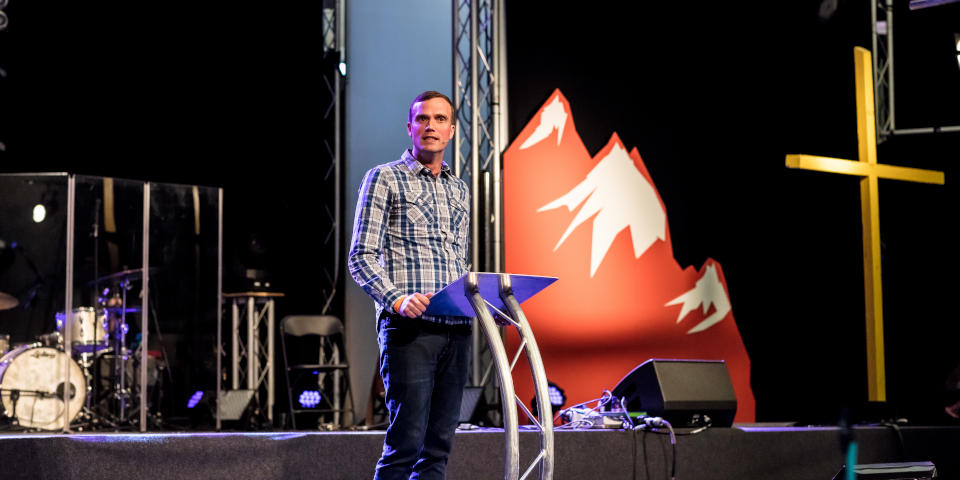
The ground has never been more fertile for sharing faith and hope, says Evangelical Alliance CEO Gavin Calver, pictured above. Ahead of addressing Elim’s 2023 Leaders Summit, Direction caught up with Gavin to find out more.
Gavin, what are your hopes and goals for the year ahead?
I’ve got many, but the main ones centre around my role at the Evangelical Alliance. We’re here to show what’s different when you face storms like the cost-of- living crisis with Jesus beside you.
My hope for this year is to see many come to faith as the church stands in the gap for the least, the last and the lost in an incredibly hard time.
But how do we share our hope in the midst of the chaos? How do we unite to make Jesus known? We need to hold our nerve theologically and go for it wholeheartedly in mission.
We’re going to do all we can as the EA to help the church do that. We need to show we’re not defined by what we’re against, but rather by the good news we’re sharing. We have an amazing opportunity to do that.
The ground has never been so fertile for evangelism and sharing hope in such a hopeless narrative.
My vision for this year is that evangelicals are good news people in a bad news world.
What is the Evangelical Alliance focusing on at the moment?
We’re helping the church serve in the cost-of-living crisis – we’re very keen to make sure more people stand together and serve alongside one another. One of my big passions is seeing every single Christian released to be good news where they are. It’s not just down to the so-called professionals.
Also, we’re still rolling out the Talking Jesus research, which is all about how non-Christians view Christians, and we’re doing an awful lot within the corridors of power to speak up and out on issues of religious liberty.
What’s giving you reason for hope in this tough season?
My main reason for hope is how my non-Christian friends are interacting right now. I don’t have any who are less interested in Jesus than they were before the pandemic. That’s not to say they’re getting on their knees and surrendering their lives to Jesus, but they’re interested, asking questions and engaging. The findings of the Talking Jesus report last year show this reflects the bigger picture in the UK. It found that one in three non-Christians want to know more about our faith. That’s up from one in five in 2015, which is a remarkable change in such a short time. It feels like there’s a greater openness to the gospel than at any point in my lifetime, so hope for me comes in the opportunities to share with those who don’t yet know Jesus.
One challenge, however, is the fact we live in an ‘I-centred’ country where me and my happiness are most important. As Christians, we need to be looking beyond ourselves and focusing on those outside the church and helping them come to know Jesus.
But I’m hopeful about how the current chaotic cultural narrative gives opportunities for the Rock of Ages to transform lives.
When you became CEO of the EA you talked about the importance of bravery and kindness. How is the church doing with that?
We’re doing better. I think we’re trying to humanise what it means to be an evangelical, because let’s be realistic – that word needs redeeming.
In terms of bravery, the challenge to the church is that if you’re not prepared to be outrageously brave, you will get caught up in the secular tsunami. So at the EA, for example, we’ve made a stand on issues that no one else will, like our work around conversion therapy legislation.
Within that bravery, it’s also easy to be really kind, though. The problem we face here is that the world sees kindness as “don’t challenge anything, don’t correct anything, don’t comment”. Our culture says you can’t be friends with anyone unless you agree with everything. That’s absolute garbage.
At my commissioning into this role, an old friend who is an atheist said, “I couldn’t disagree more with what you’re doing. I couldn’t be more disgusted by the role you’ve taken on. I couldn’t be more sickened by the cause you’ve given your life to, but well done mate, I’m really proud of you.” We can do that too. We can approach people thinking, “you’re made in the image of God, so I’ll treat you with dignity and integrity.”
Where society is trying to fracture us all, our kindness will make us amiable. But our bravery will make us distinct from the social narrative too.
This season is about posture for the church. Are we going to posture ourselves inwards or outwards towards the lost?
Normally, when the church faces cultural challenges it often aims to sort itself out first, then gives secondary thought to those beyond. But actually, can you imagine going through this season without Jesus? As leaders we may be limping, but we need to own our fragility and walk with a limp towards the lost instead of trying to heal ourselves first.
This is important because the ground is ripe for harvest. For me, this is the greatest moment to be alive in order to share the gospel.
But we must make the most of it. This is the moment to raise the bar in our prayer lives for those who don’t yet know Jesus and to be good news. The circumstances are there for real breakthrough – let’s not miss it!


