
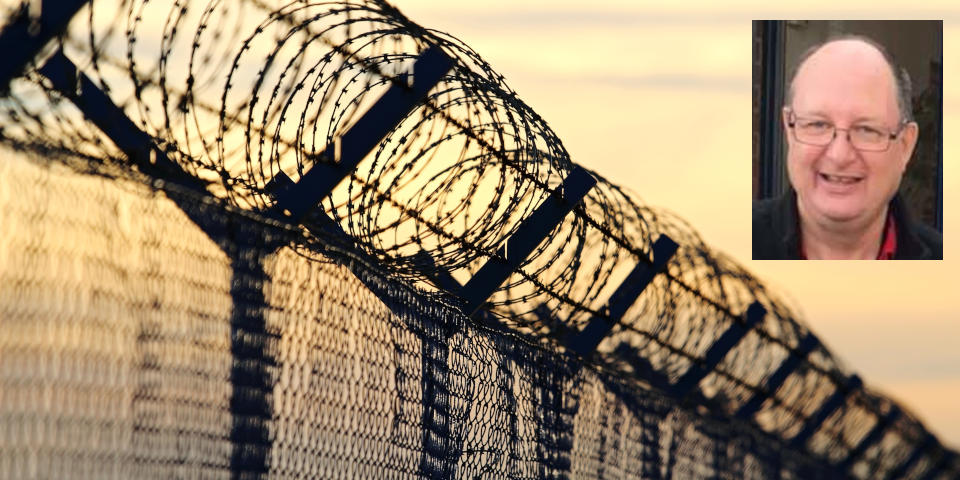
When women leave prison, their first hour of freedom can be the most challenging. That’s where Simeon Sturney, pictured above, makes a vital difference. He talked to Chris Rolfe.
The woman had just been released from prison. Disoriented, she was glad of the fellow former inmate beside her who was offering a place to stay.
But her dream of a new beginning turned into a nightmare when the landlord demanded sex in return for her new home. Refusing, she was soon homeless, then she was viciously attacked on the streets. Before she knew it, she was back behind bars.
This is the kind of brutal reality prison chaplain Simeon Sturney sees far too often, and is the subject of his new book ‘Gate Happy’ – which is all about leaving prison.
“Many people presume that when somebody leaves prison everything goes back to normal, so the aim of my book is to share the more challenging side, give insight into the stigma and difficulties ex-offenders face, and also to encourage more people to get involved with prison work,” he says.
Simeon, who is a member of Elim’s Kingdom Living Church in Staines, has been involved in prison work for 18 years. Working in western Europe’s largest women’s prison, HMP Bronzefield in Ashford, Middlesex, he began as a probation officer and has since held various roles with the chaplaincy service. Today, he supports newly released female prisoners.
“For the past five years I’ve met women from all sorts of backgrounds, cultures and countries in the holding cell prior to their release and walked the mile to the train station with them,” he explains. “My role is to support, steer and guide them at a moment where they may be tempted to abort reasonable plans because they don’t think they’ll work or are tempted by a ‘better offer’. At this dramatic time, they can be anxious, scared, or they may not know where they’re going next.
“As I meet them, I will usher them through the gates and we can go to a coffee shop for a chat, or I can walk to the station with them if they don’t have anyone meeting them.”
Sometimes Simeon’s role involves carrying bags, helping with lost tickets or worries about upcoming appointments. At other times it can involve trying to steer women away from a nearby off-licence, protecting them when an unwelcome visitor is waiting at the gates, or placating an irate boyfriend who has deliberately been given the wrong release date. Simeon is also on hand to step in when a member of station staff or the public gets propositioned.
But often, he says, it is just about listening as women tell their heart-breaking stories.
“A lot of women have nowhere safe to go, they’re being met by manipulative or coercive partners or families, or they’ve been told to go to the council for accommodation but instead choose to go to a drugs den because they know the rules there. Other women have been offered a room but feel unable to take it because their boyfriend will cuckoo it to sell drugs. They, not him, will be the one convicted if it’s raided because it’s in their name.
“You hear stories that are very real, very earthy, and it’s not for me to tell them they shouldn’t drink or take drugs. They know that already. Instead, it’s my job to offer them dignity and respect, to support them, steer them to safety where I can offer to pray with them.”
It is heart-warming, Simeon says, when a woman opens up and then asks for prayer. “I will pray on the platform as we wait – for protection, healing and safety for them and their families.”
While some of Simeon’s work is with ‘revolving-door women’ who he has seen repeatedly over the years, he sometimes gets to hear more positive stories of women who have broken free of their pasts.
“I was a guest speaker at a conference and a woman introduced herself and reminded me that I had encouraged her with the story of Jesus in the boat during the storm. She had come deliberately that day because I was speaking and wanted to say thank you. She’s doing really well now.”
Simeon’s work was recognised last year when he was awarded a commendation from the Butler Trust, which celebrates good work in prisons, the probation service and youth services.
Today, he is glad to continue his work supporting women.
“As a chaplain, it’s my job to journey with them, to love practically and to sup-port them at this vulnerable time when they hope all will be well, but the reality is often something different.”


