
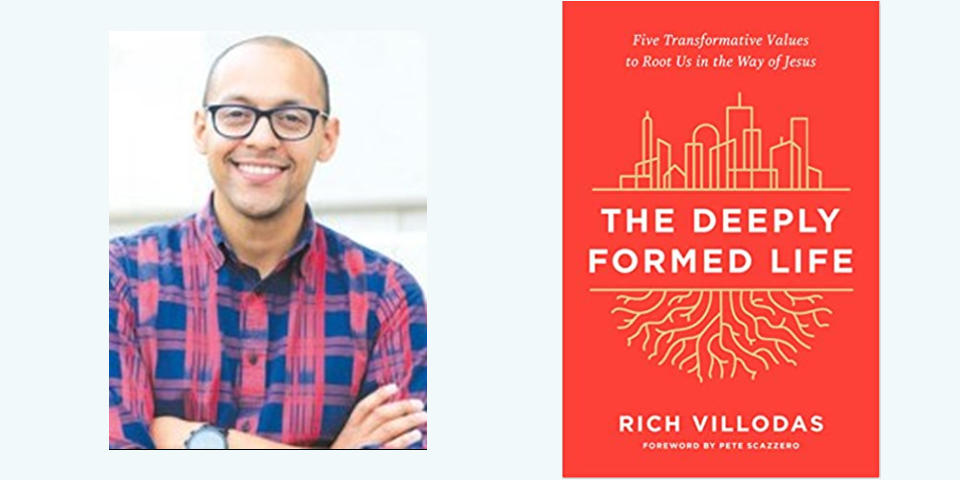
New York pastor Rich Villodas examines five key Christian aspects in his new book.,,,
New York pastor Rich Villodas was invited as a guest speaker at the Elim Leadership Summit. Rich is lead pastor of New Life Fellowship in Elmhurst, Queens, and also has a new book out. We asked him about it.
Tell us about your book, The Deeply Formed Life.
I’ve tried to ask what the issues are that I see coming up over and over again, and how I can give very practical habits to make inroads into greater wholeness for our lives.
It’s about holding together five aspects of spiritual discipleship that aren’t always put together: contemplative rhythms, racial reconciliation, interior examination, sexual wholeness and missional presence.
These are the five values of our church, so I wrote this book primarily for them, but because these areas are so universal it has resonated around the world. I wanted to resist compartmentalisation. Some folks might say racial reconciliation is good if you’re in a diverse setting, for example, but it isn’t a priority if you’re in a mono-cultural or mono-ethnic setting. I’m saying no, this is a gospel value and a gospel issue regardless of where you are.
You talk about “contemplative rhythms for an exhausted life”. What’s this about?
The contemplative life speaks to the hurriedness and franticness we’re all accustomed to. It’s not just limited to people in urban centres. Plenty of people in suburban and rural areas are struggling with productivity and pace of life too, so that value is about resisting the pace of life that often keeps us frenzied and frazzled.
What were your favourite chapters to write?
My favourites were the chapters on interior examination, because as I wrote them I experienced significant breakthroughs myself. In my writing, I was trying to unlock some of my own challenges, limitations and struggles, and because I was able to articulate them the Lord met me in that. I found God’s hand on my life in terms of greater joy and freedom.
What can we expect to see next from you?
I have another book coming out in July called Good and Beautiful and Kind, with the subtitle “becoming whole in a fractured world”. In it, I try to identify the fractures within and between us and what invitations God might have for our wholeness – individually and together. Hopefully it will serve people as they wrestle with what’s happening in society today. One thing it asks is why there are fractures, looking at things like sin from a more accessible perspective and the fact there are forces outside of us that we need to pay attention to. The second part asks how we can think about a new path towards wholeness and looks at things like contemplative prayer, humility and calm presence. And then I ask how we can give expression to this, looking at conflict, forgiveness and justice.
You were invited to speak at Elim’s Leaders Summit. What’s your key thought for the movement?
As I thought about the conference I wrestled with the idea of abiding with God. In John 15, Jesus talks about remaining and abiding in him. What does it mean to abide with God, with our neighbour and with ourselves? If we can examine those questions and allow Jesus to lead us in the answers, I think we’ll find greater intimacy and depth of life with God and one another, and a freedom within ourselves that will position us for the kind of connection we long for.
From Direction Magazine issue 237


