
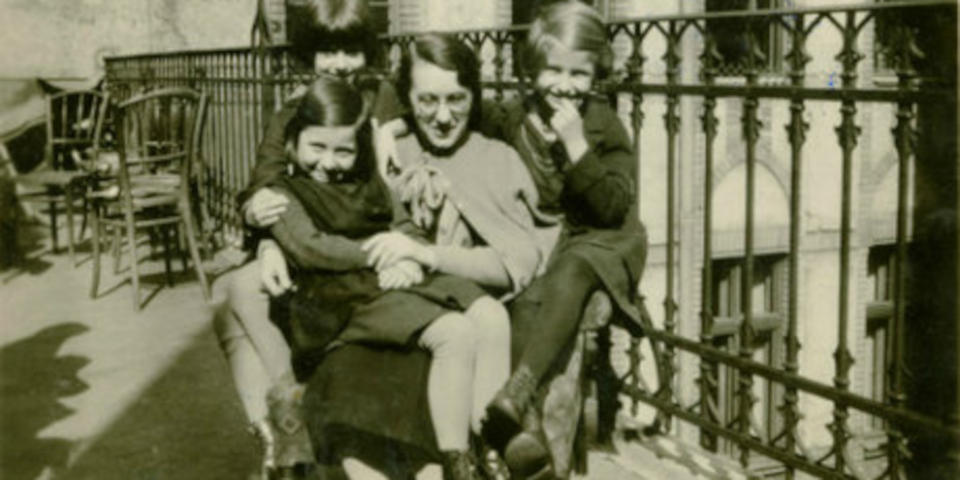
Jane Haining made the ultimate sacrifice for loving the children she was responsible for.,,,
New light has been cast on a Holocaust heroine who paid the ultimate sacrifice.
The discovery of a handwritten will and more than 70 photographs has provided fresh insight into the life of a Christian martyr who perished at Auschwitz.
Just six months before the camp was liberated by the Red Army on January 27, 1945, the life of courageous Scot Jane Haining was snuffed out, aged 47, by Nazi butchers for the ‘crime’ of loving the Jewish girls under her care.
The “priceless” finding in the attic of the Church of Scotland World Mission Council’s archive in Edinburgh has once again brought Jane’s story into sharp focus, not long after the publication of a new book on the subject.
From Matron to Martyr – One Woman’s Ultimate Sacrifice for the Jews (Tate Publishing), is authored by New Zealander Lynley Smith, a distant relative who travelled the world to research details for her magnificent portrayal of this brave woman from Dunscore, near Dumfries – the only Scot to be honoured with a ‘Righteous among the Nations’ award by the Yad Vashem Holocaust Museum in Jerusalem.
Commenting on the poignant discovery of her last will and testament, dated July 2 1942 and bequeathing her typewriter, coat and other items to various people, council secretary Rev Ian Alexander said: “It is a wonderful document and tremendously exciting to have something that Jane Haining herself has written. It gives a sense she was fully aware of the risks she was taking.
“Scottish missionaries were advised to return home from Europe during the dark days of the Second World War, but Jane declined and wrote: ‘If these children need me in days of sunshine, how much more do they need me in days of darkness?’”
Jane had been living and working in the Glasgow area before taking on the role of matron at a girls’ home in Budapest, Hungary – the boarding establishment of a school run by the Scottish Mission to Jews.
So dedicated was she to what she believed was her life’s calling that she refused to leave her post when given several opportunities to escape, and even being ordered home by her superiors, who feared for her safety.
But more important to her was the safety of the Jewish girls under her care, already suffering under relentless discrimination and persecution even before the Nazis marched into their country.
Many of their parents were forcibly split up by the authorities as they sent the breadwinning Jewish men away, ostensibly to work camps, leaving families destitute and distressed.
The children often took refuge in the arms of Jane, who loved to comfort them with hugs and prayers of assurance.
Jane was eventually arrested by the Gestapo on a series of charges which basically amounted to showing too much concern for the Jews.
Leaving her girls distraught, she was moved around various local prisons before being corralled into a cattle truck, crushed in with some 90 other women, for the long journey to Auschwitz in south-west Poland. She died soon afterwards, allegedly of natural causes.
A postcard written two days before her death indicated no ill-health, but hinted at her impending ‘promotion’ to meet with her Lord in heaven.
Delighted by the new discovery, author Lynley Smith told me: “It shows that Jane was well aware of the danger she was in. Bearing in mind that her Bible was miraculously rediscovered in 2010, I think God is keeping her story alive as its message – her example of loving the Jews enough to die for them – is so urgent for today.”


